

Join stage
A Join stage is used to combine two datasets side-by-side, using one or more matching columns as join points to determine how the rows in each dataset should relate to each other.
The Join stage in Quantemplate accepts two inputs, allows for multiple join points and is able to output multiple combinations of matched and unmatched rows.
Workspace
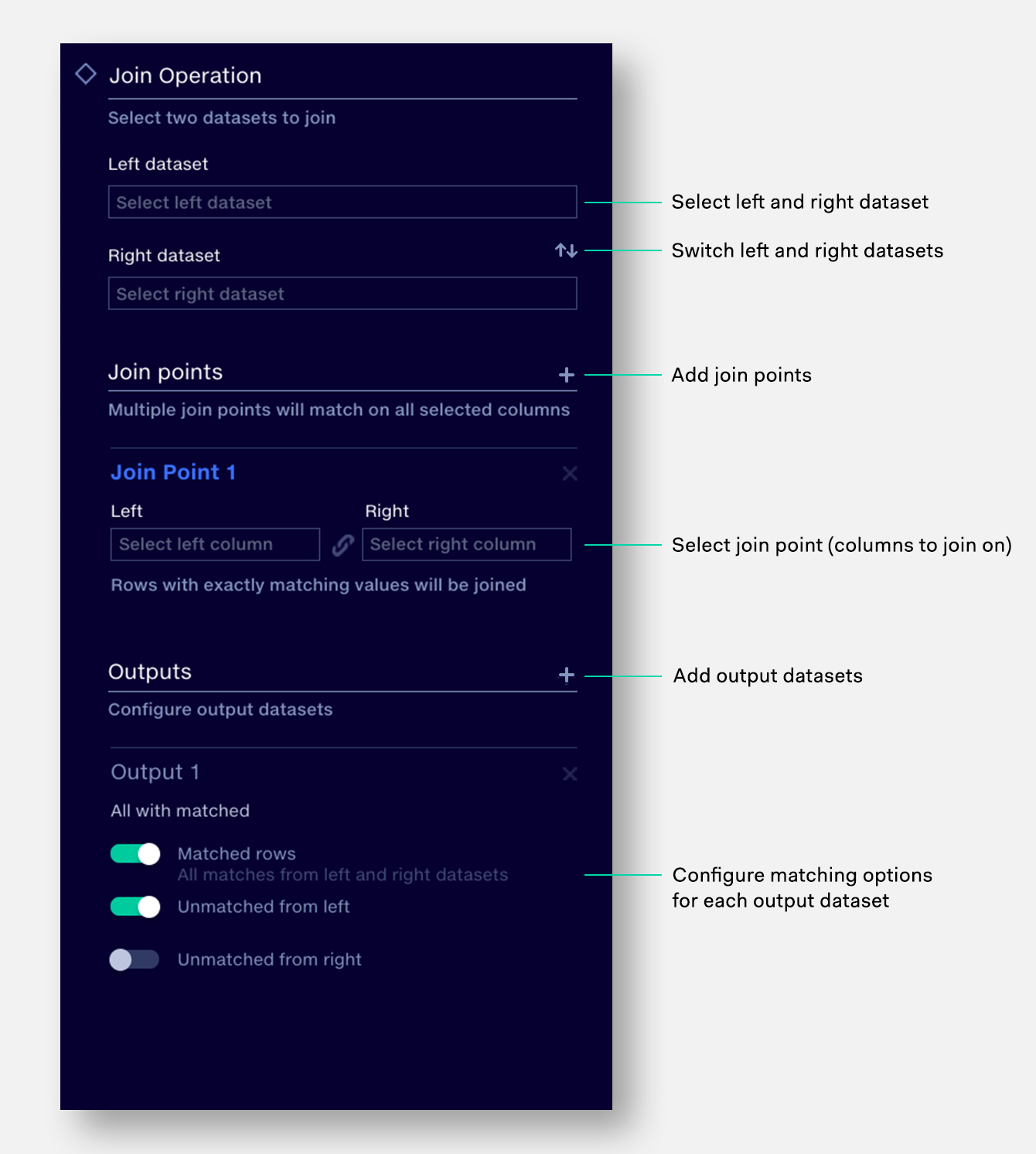
Inputs
A join stage supports two input datasets, which are then defined as Left and Right. The left dataset will appear on the left side of the output dataset, the right dataset on the right side.
Join points
The join point is the column on which the source datasets will be combined. When a value matches exactly in both source datasets, the rows from both datasets will be joined.
Multiple join points can be configured. This allows joining on multiple criteria, for instance when both the Policy No. and Insured Name match.
To allocate amounts from the Right dataset across matching rows in the Left, such as payments against invoices, turn on Reconciliation. See Reconcile amounts between datasets.
The join point column appears in both output datasets. Where both sides contain a column with the same name, the column from the right side has the source dataset name appended to it (see example below).
Outputs
The rows contained in output datasets are configured via three toggles:
- Matched Rows from both datasets
- Unmatched from Left dataset
- Unmatched from Right dataset
This allows the configuration of all standard join types:
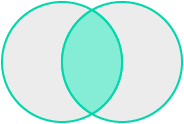
Inner Join
Only matched rows from both datasets
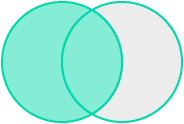
Left Outer Join
Matched rows from both datasets,
plus unmatched rows from Left dataset
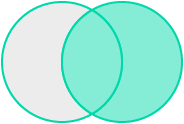
Right Outer Join
Matched rows from both datasets,
plus unmatched rows from Right dataset
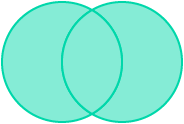
Full Outer Join
Matched and unmatched rows from both datasets
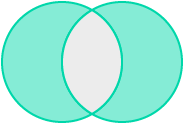
Full Outer Join with Exclusion
Unmatched rows from both datasets
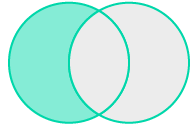
Left Outer Join with Exclusion
Unmatched rows from Left dataset
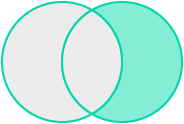
Right Outer Join with Exclusion
Unmatched rows from Right dataset
Multiple output files may be configured, for instance: one file with the results of a Left Outer Join, plus another file with all the unmatched rows from the join. To avoid creating duplicate output files, identical output combinations will be exported only once.
Configuring a join
To configure a join:
- Insert a join stage.
- In the input selector, choose two input files to join.
- Click on ‘Click to configure join’ to enter the join editor.
- Select the Left and Right datasets from the input files.
- Configure a join point: select the column to join on in the Left and Right datasets.
- Configure additional join points if required.
- Select what the output dataset should contain (e.g. matched rows, plus unmatched from left).
- Configure additional output files if required.
Example
KEY |
LEFT |
RIGHT |
|---|---|---|
Matched row |
||
One-to-many match |
||
Unmatched row |
Input: Table 1
A dataset of the policies written and their Inception and Expiry dates is configured as the Left dataset in the join.
Policy Ref |
Insured |
Incept |
Expiry |
|---|---|---|---|
AB123456 |
General Insure |
1/1/2010 |
31/12/2010 |
AB123457 |
Etc Insure |
1/1/2010 |
31/12/2010 |
AB123458 |
More Insure |
1/1/2010 |
31/12/2010 |
AB123459 |
Less Insure |
1/1/2010 |
31/12/2010 |
AB123461 |
XYZ Insure |
1/1/2010 |
31/12/2010 |
Input: Table 2
A list of contents amounts is configured as the Right dataset in the join.
Policy Ref |
Property |
Contents |
|---|---|---|
AB123457 |
5 Main Road |
75,000 |
AB123457 |
1 Highway |
80,000 |
AB123458 |
74 Highstreet |
75,000 |
AB123459 |
24 Chestnut Avenue |
50,000 |
AB123460 |
99 Red Balloon Way |
50,000 |
AB123461 |
12 Grove Road |
60,000 |
AB123462 |
36 Acacia Avenue |
40,000 |
Output 1: Tables 1 and 2
- Include matched rows
- Include unmatched rows from left
- Exclude unmatched rows from right
Table 1 and Table 2 are joined on Policy Ref, with the output dataset containing all rows from the Table 1 and matching rows from Table 2. Two matches were found in Table 2 for AB123457, creating two rows in the output dataset. No match was found for AB123456 – a row is created in the output dataset, but the columns from Table 2 are empty.
Note that the Policy Ref column is now duplicated, with the column from Table 2 renamed ‘Policy Ref (Table 2)‘. If desired, this column can be removed via a subsequent Map Columns operation.
Policy Ref |
Insured |
Incept |
Expiry |
Policy Ref (Table 2) |
Property |
Contents |
|---|---|---|---|---|---|---|
AB123456 |
General Insure |
1/1/2010 |
31/12/2010 |
|||
AB123457 |
Etc Insure |
1/1/2010 |
31/12/2010 |
AB123457 |
5 Main Road |
75,000 |
AB123457 |
Etc Insure |
1/1/2010 |
31/12/2010 |
AB123457 |
1 Highway |
80,000 |
AB123458 |
More Insure |
1/1/2010 |
31/12/2010 |
AB123458 |
74 Highstreet |
75,000 |
AB123459 |
Less Insure |
1/1/2010 |
31/12/2010 |
AB123459 |
24 Chestnut Avenue |
50,000 |
AB123461 |
XYZ Insure |
1/1/2010 |
31/12/2010 |
AB123461 |
12 Grove Road |
60,000 |
Output 2: Unmatched Claims
- Exclude matched rows
- Exclude unmatched rows from left
- Include unmatched rows from right
These items could not be matched with a policy number in the first dataset, so may require further investigation.
Policy Ref |
Property |
Contents |
|---|---|---|
AB123460 |
99 Red Balloon Way |
50,000 |
AB123462 |
36 Acacia Avenue |
40,000 |
Preparing data for a join
Join points must be identical between datasets, including case and whitespace. When a join ‘fails’, a blank value for that row is returned. If all join points fail, the column name will appear but contain no values.
To increase the likelihood of a match between datasets, clean up the join points so that values differing only in case, spacing, punctuation or accents still match.
Cleanse join points
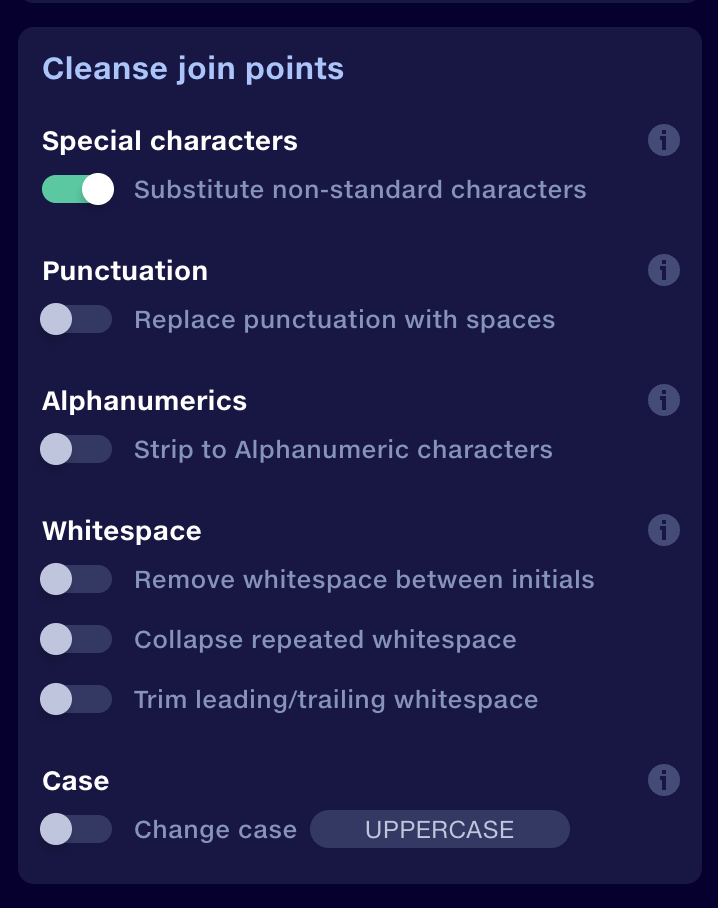
The Join stage has its own text cleansing for join points. Turn on the actions you need under ‘Cleanse join points’.
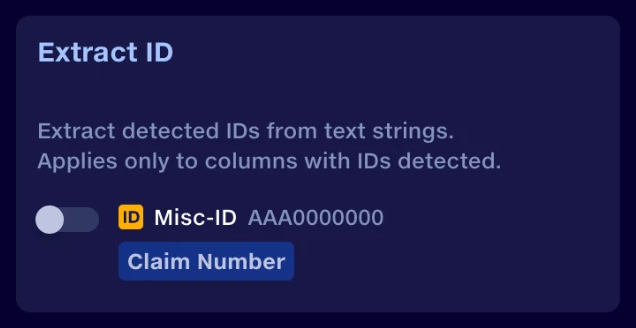
Extract ID is also available, for join points with a detected ID type.
These actions work the same way as in the Text Cleanse operation, and run in the same order. For full details and examples, see Text Cleanse.
Free form text values may also benefit from being standardized using Auto Map Values, matching incoming data to a known good value that exists in the corresponding reference table.
Blanks
Joins cannot be performed on blank cells. Blank entries on the joined column should be set to a value such as ‘N/A’ in both the reference file and the pipeline.
Validating joins
Create an output for unmatched values
In the join stage, configuring a new output to show ‘unmatched from left’ or ‘unmatched from right’ will help troubleshoot each row that fails the join.
View failures in the Validation Report
This method will flag rows which have been missed from joins in the validation report, in a way that's easy to understand.
- Input to stage: unmatched values from any joins in the pipeline.
- Use Append Metadata: Stage input name. This will allow us to identify which join stage produced the failure.
- Use Map values to map the stage input name to an error code. For example, to flag when a join on ‘REF: US States’ fails, map the stage input name to "Unmatched State" and write the values to a new column called "Failure Reason"
-
In the Validation operation enter a validation rule to flag occurrences of the failure reason:
Failure Reason != "Unmatched State"