

Pipelines workspace
Overview
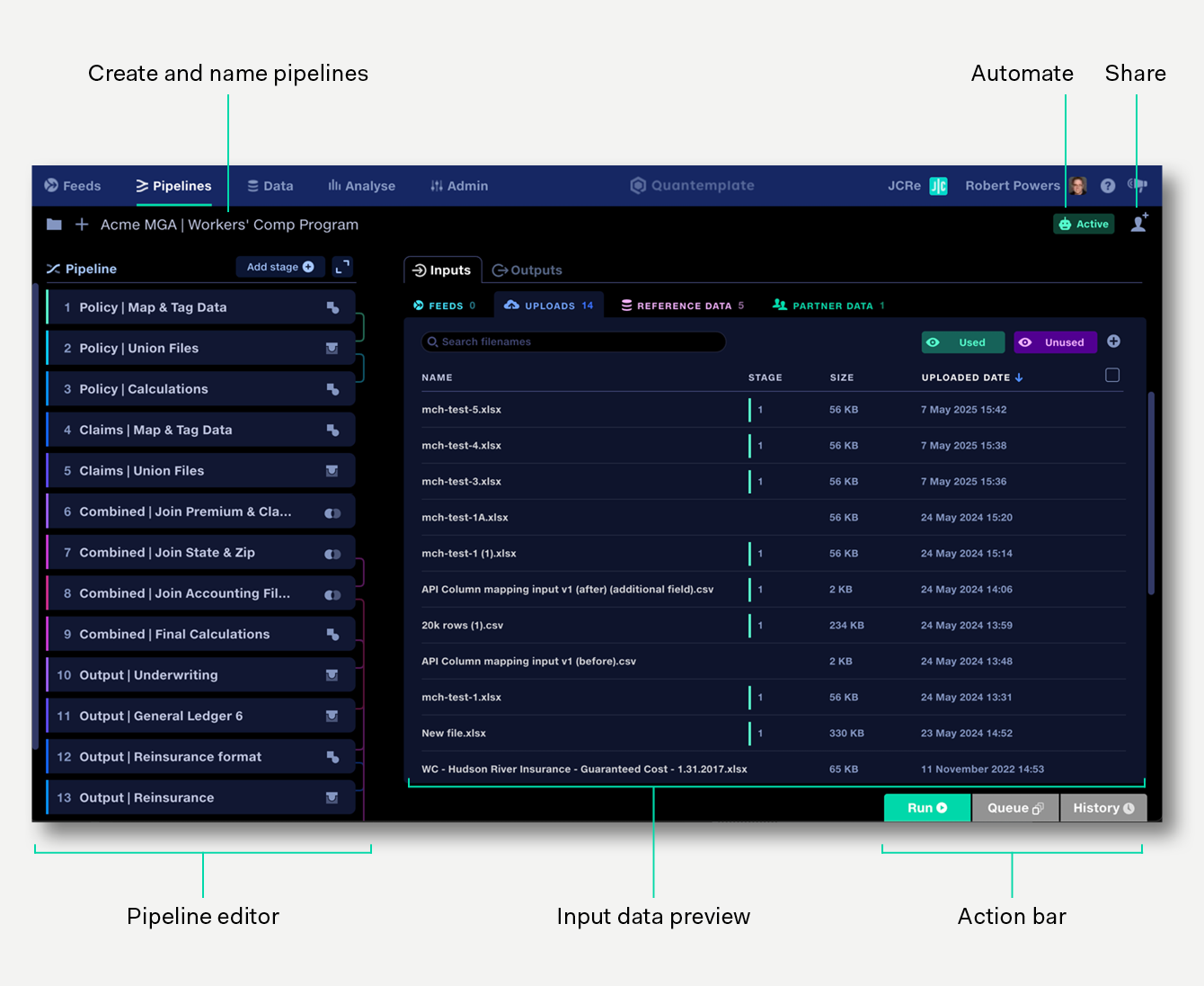
The pipelines workspace is formed of:
-
Stages panel
Create sequences of operations to transform, augment and validate data. -
Pipeline inputs
View and manage uploaded files, reference data and partner data. -
Pipeline outputs
View validation results, mapping reports and output data. -
Action bar
Run the pipeline, view the run queue and revision history. -
Automation
Set the pipeline to Auto Run and Auto Export. -
Sharing
Share the pipeline with members of your organisation. -
Create and name pipelines
Access the pipelines folder, create a new pipeline or rename the current pipeline.
Stages panel
View and edit your data transformations as a sequence of collapsible stages and operations.
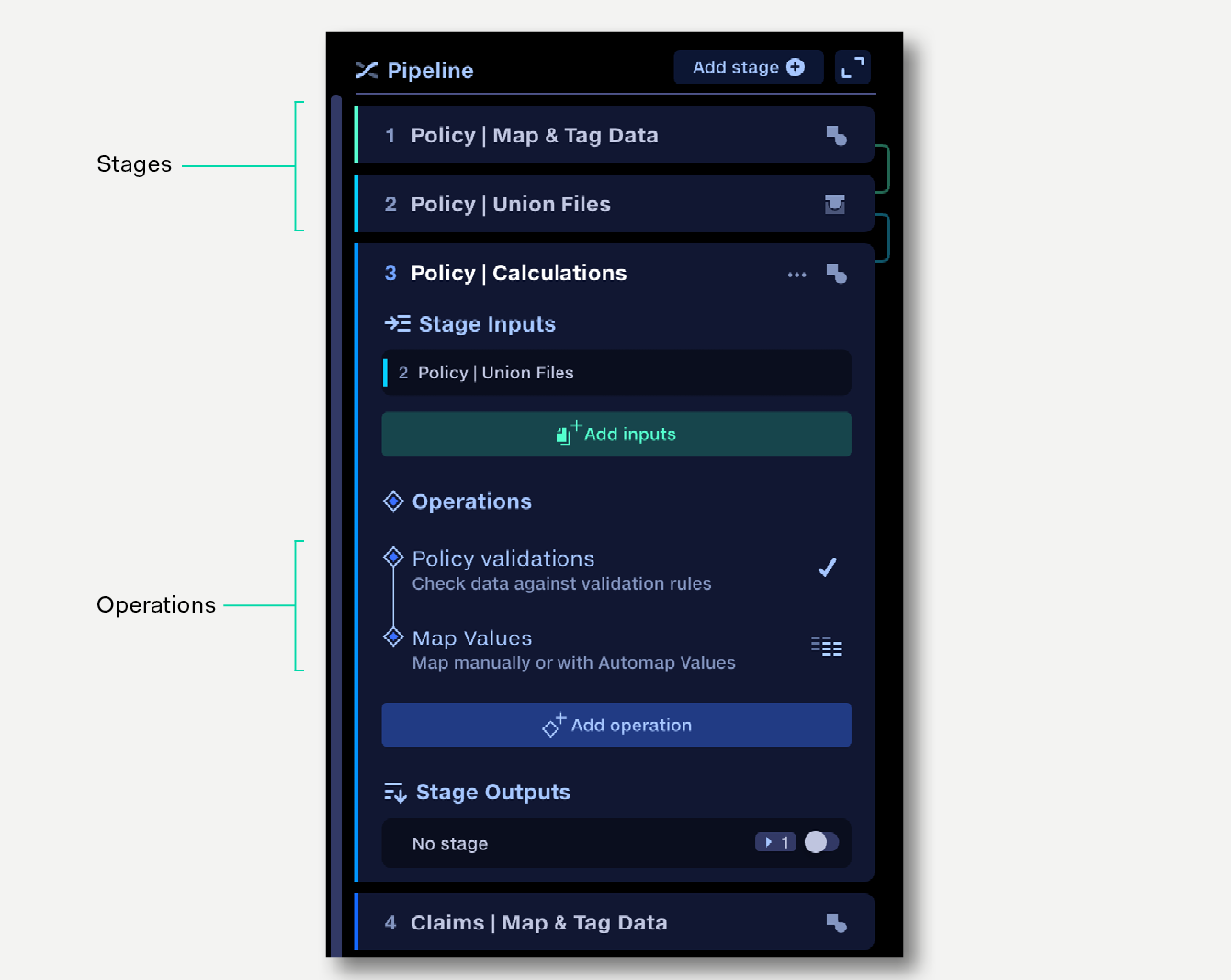
Stage
Structure your data transformations with Join, Union and Transform stages.
Operation
Within a Transform stage, use sequences of Operations to apply transformations to your data.
Input tabs
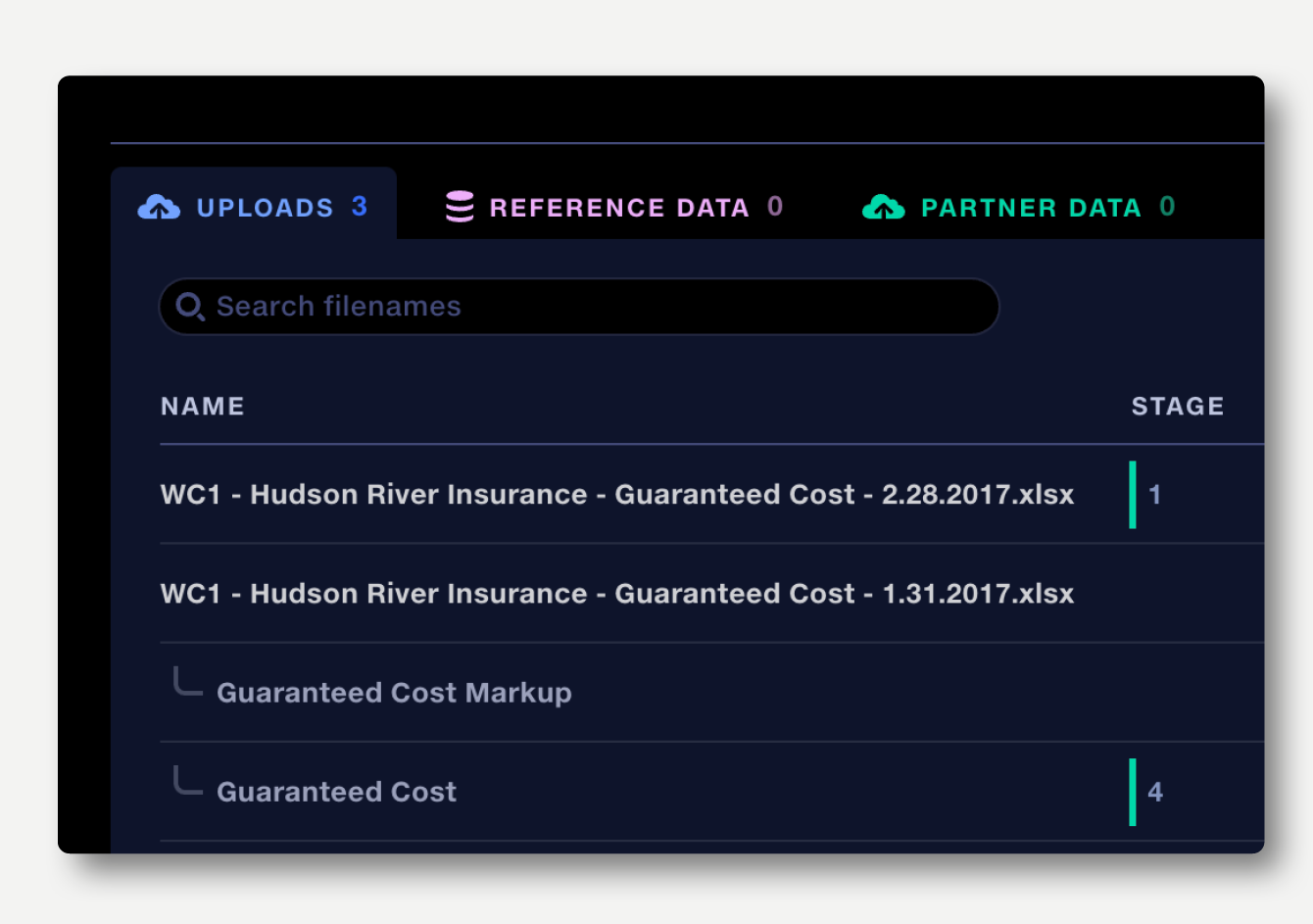
In the Pipeline view, the main panel contains tabs to manage pipeline inputs: uploads, reference datasets and partner data, allowing you to add, view and manage files used in the current pipeline. See the pipeline inputs page for more details.
Pipeline Outputs
A summary of all outputs of the pipeline, including validation reports, mapping reports, output datasets, the run log and results of previous runs.
See the pipeline outputs page for more details.
Action bar

Run
Run the pipeline to perform the data transformations and create the output datasets, validation report and mapping reports. Running the pipeline will open the Run Log popup, from where the results of previous pipeline runs can be viewed, shared or downloaded. Learn more pipeline runs.
Queue
If the pipeline has been set to Auto Run, or can be run via API, it can receive multiple instructions to begin a run. Upcoming runs are placed in a queue, which can be managed via the queue popup.
History
Every time a user makes an edit or causes a trace to run, the pipeline is automatically saved and a new version is recorded. The history panel records the versions and allows rollback to previous versions. Learn more about history.
Sharing
Pipeline owners can click the share button on the top right to share a pipeline with members of their organisation. Learn more about sharing.

Create and name pipelines
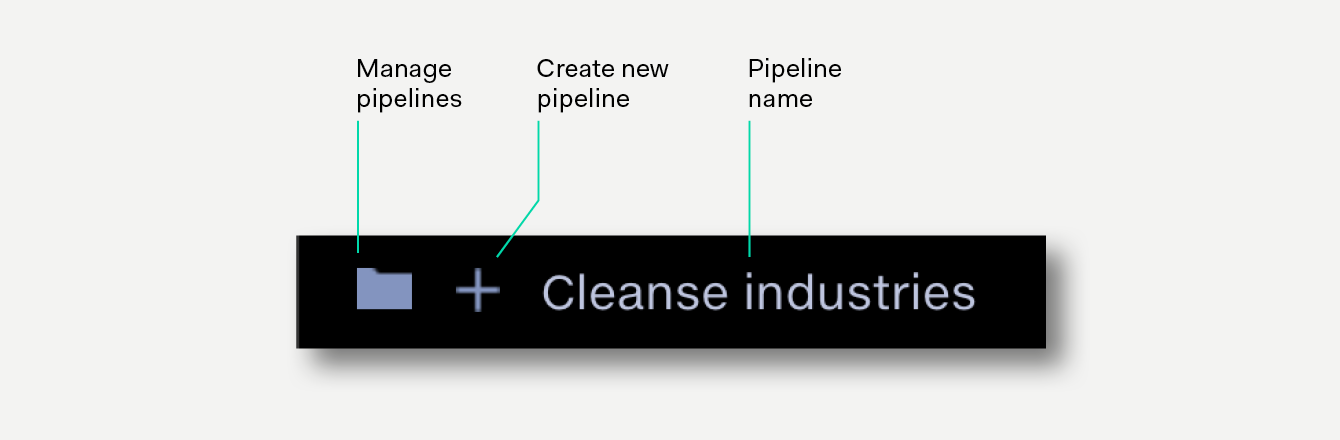
Click the folder button to view and manage all your pipelines.
Click the + button to create a new pipeline.
Click the pipeline name to rename your pipeline.
Learn more about creating, naming and managing pipelines.