

Quantemplate's newsfeed-style repos provides a live view of your pipeline activity across your environment. Repos help you monitor pipeline statuses, identify issues early, and keep track of every automated flow of data.
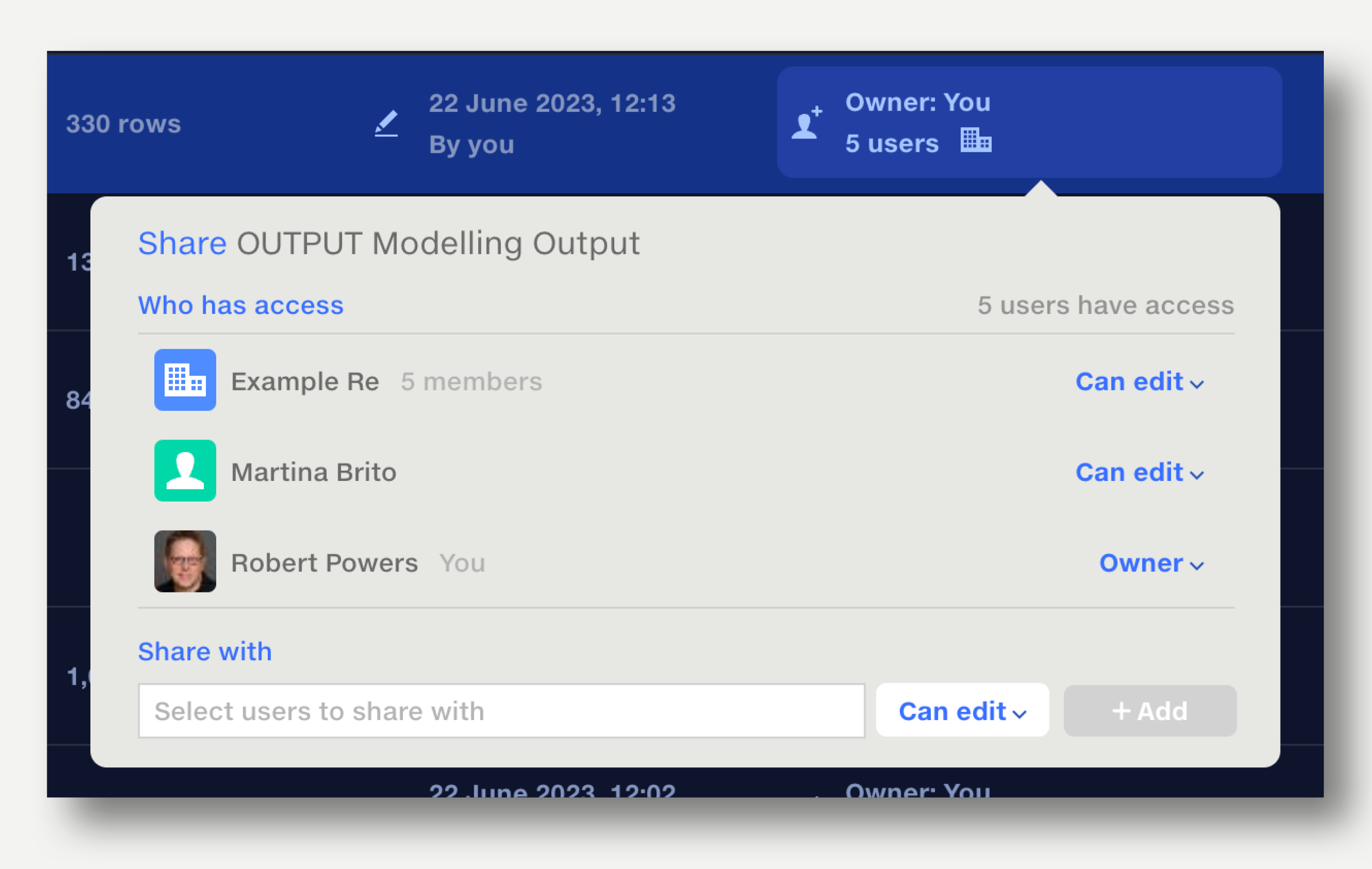
The metadata bar below the pipeline name displays information about how the pipeline is used, updated and connected. Click on each item to reveal more details.
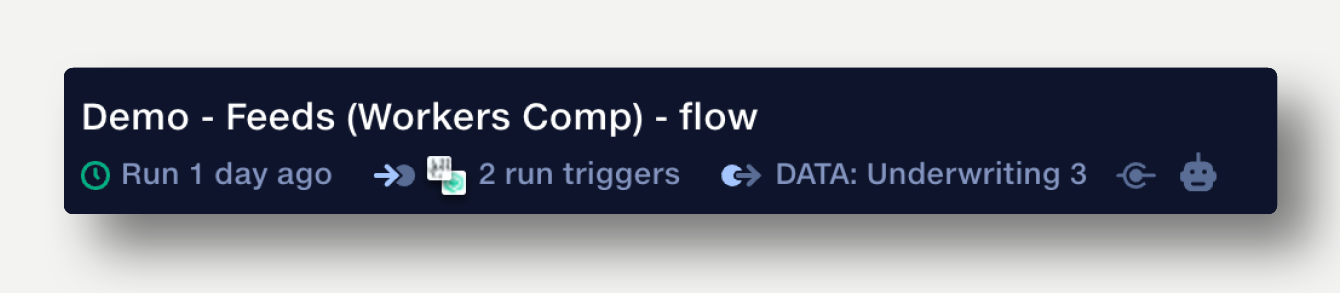
See if a pipeline was updated, 'Just now', '1 minute ago' or even '1 year ago'. The clock icon changes tone depending on the recency of the last update, helping spot recent activity at-a-glance.
Feeds or datasets which trigger a pipelines run are listed. If a feed is connected to a partner, their logo is shown. Output feeds or datasets are also listed. Click on a feed or dataset to open it in a new tab.
If the pipeline has been shared with the API or Robot users, the API or Robot icon is displayed in the metadata bar.
The repo view also shows:
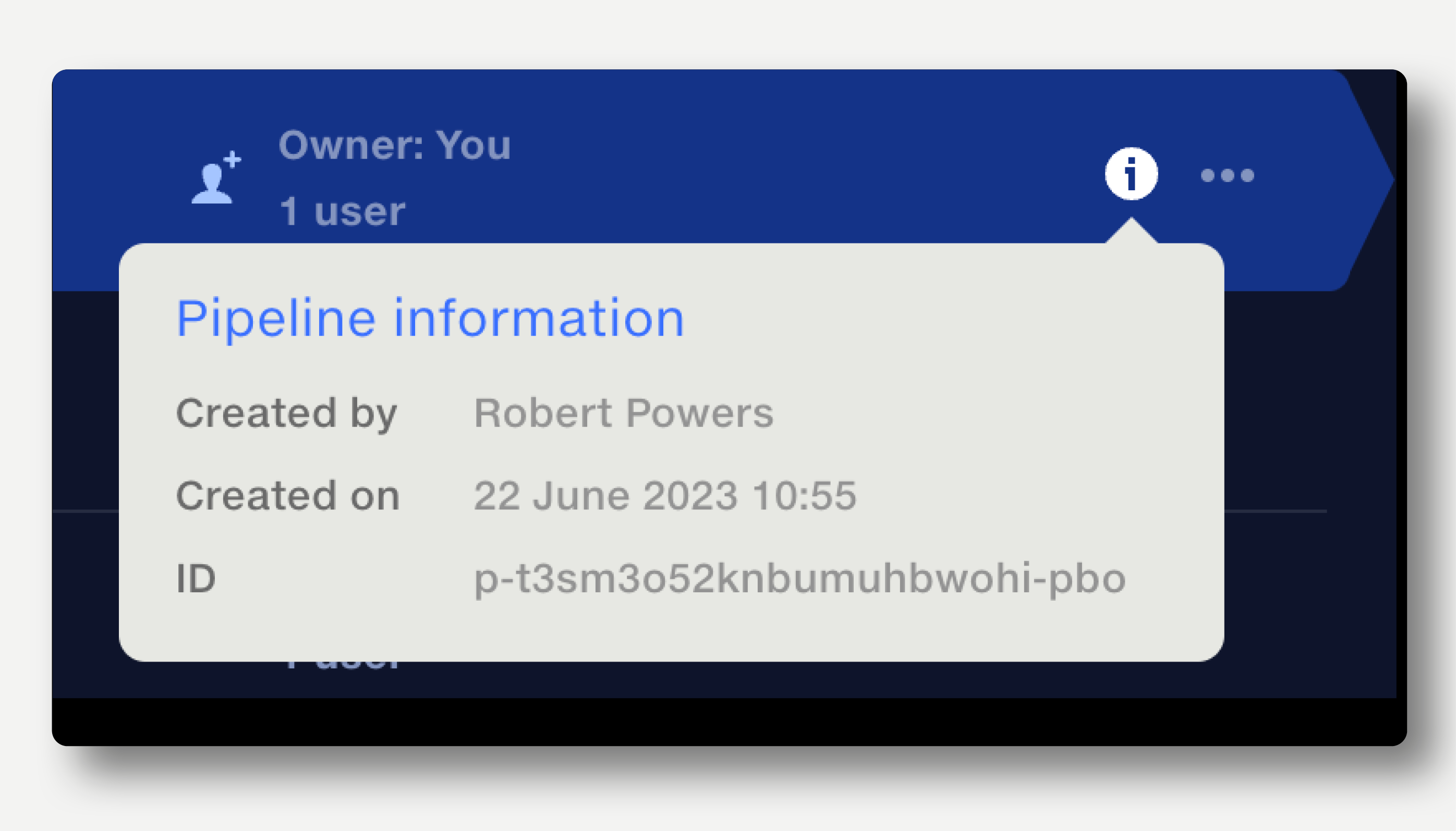
Click the three dots at the end of the row and select ‘Duplicate’ from the popup menu. The pipeline is instantly duplicated and the document opened. The suffix ‘– copy’ is added to the duplicate pipeline’s name.
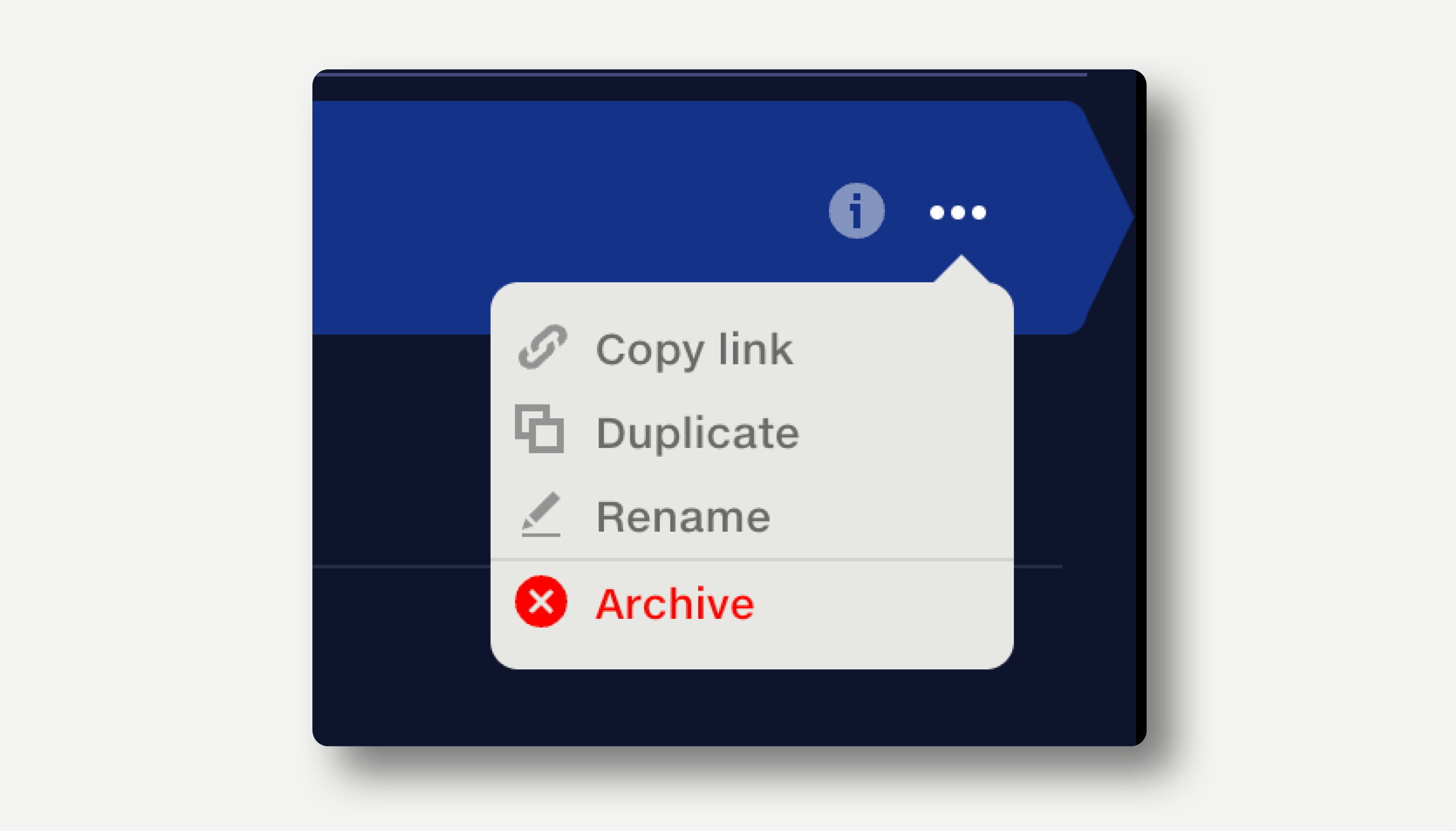
Click the three dots at the end of the row and select ‘Rename’ from the popup menu. Alternatively, edit the pipeline name by opening the document and clicking on the name.
Pipelines are sorted by 'Last update' by default. This updates live, keeping you up to date with the status of your runs, validations and automations.
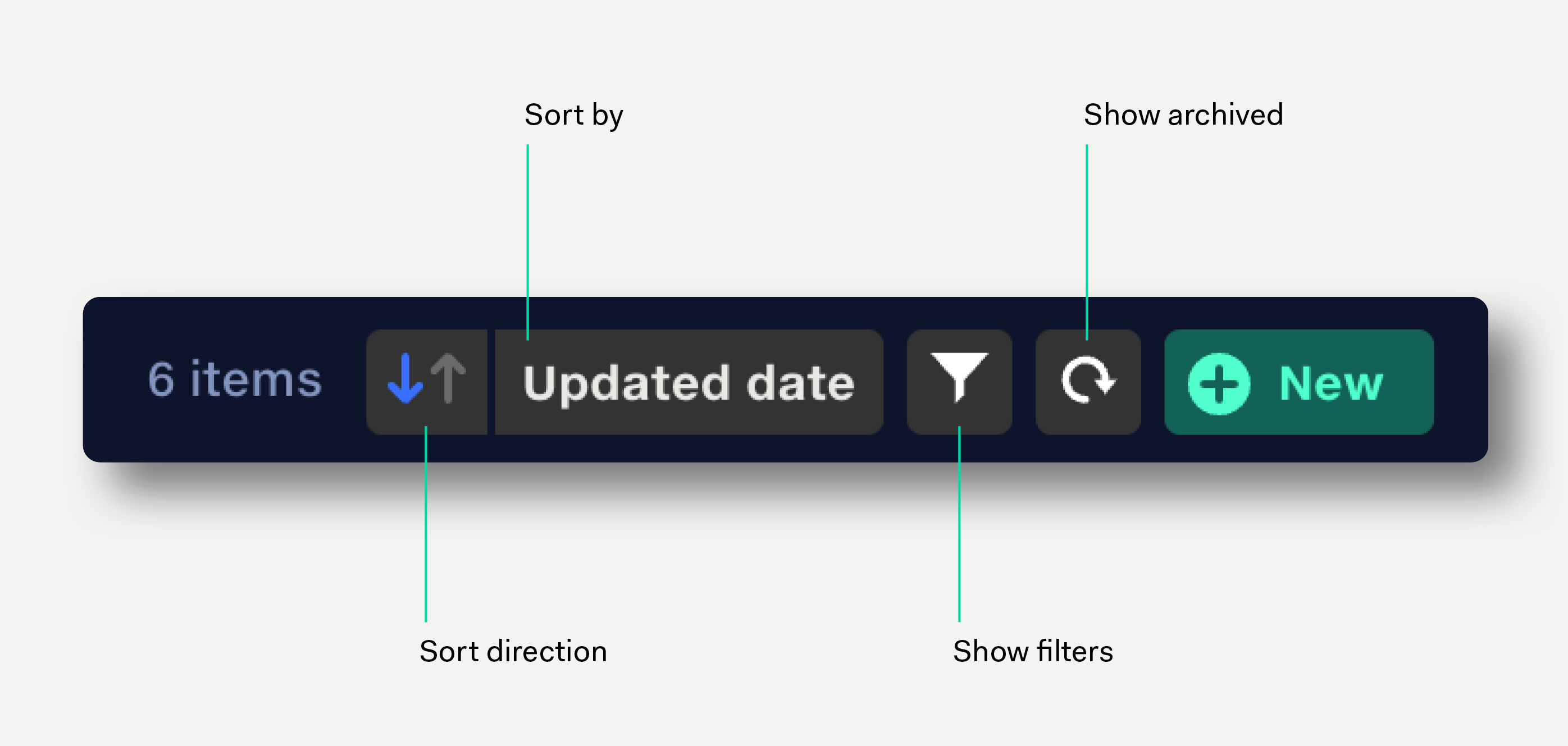
Pipelines can be sorted by pipeline name, date updated, updated by user, automation status, and last run. Click the arrow button to reverse the sort direction. Your sorting choice will be remembered.
Click in the search field to search pipelines by name.
The pipelines repo can be filtered via the side bar.
The pie chart show a summary of the pipeline statuses, giving you oversight of your automations, validations and runs. Click on the pie chart to drill down by a particular status. If you have an export blocked due to a validation issue, it will be highlighted in a separate block next to the pie chart.
For other filtering options, click the filter icon or hit ‘F’ on the the keyboard to filter pipelines by date created, date updated, pipeline name, owner, or updated by user.
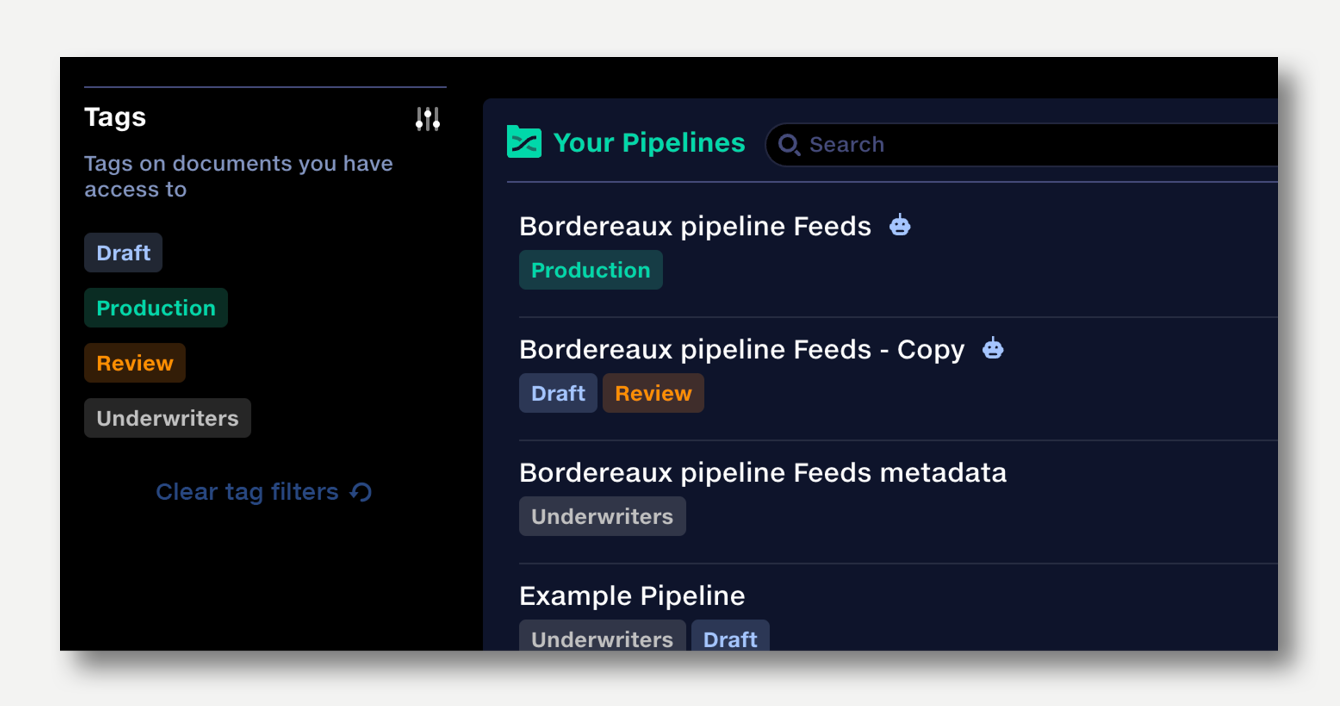
Tags can be applied to any document in Quantemplate, to help organise assets.
Tags are created by Org Admins within the repo views for Feeds, Pipelines, Data and Analyse. They can be applied to documents by document owners. Tags are set at an organisation level and are available to all document types.
Within the repo sidebar, users see all the tags for documents they have access to. Clicking on a tag in the sidebar filters the document list by that tag.
Click the three dots at the end of the row and select ‘Archive’ from the popup menu. Archived pipelines are not deleted, but hidden from the repo.
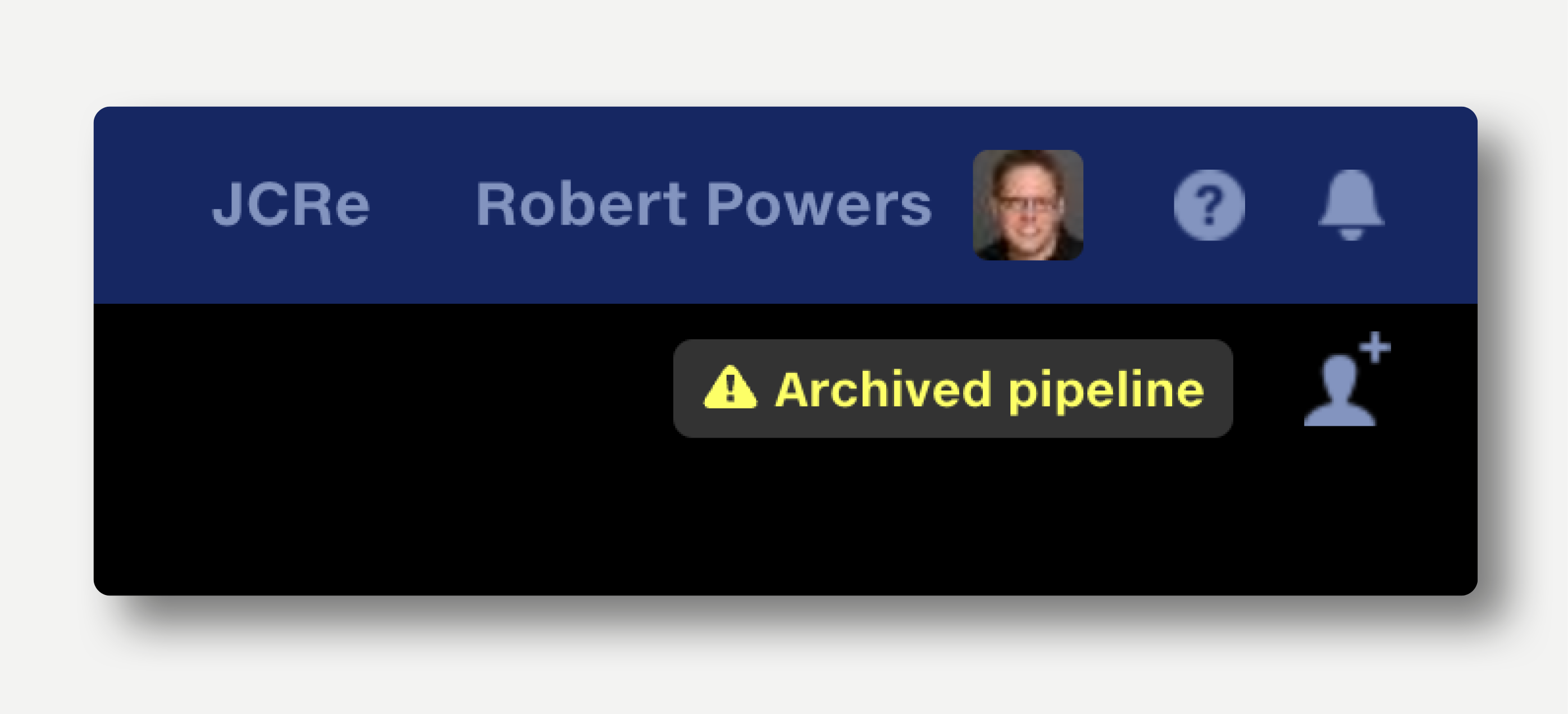
Archived pipelines display a warning in the top right of the pipeline view.
Note that pipelines in Quantemplate cannot be deleted permanently by users. Contact us if you have a specific deletion requirement.